





Introduction
Have you ever walked into a barbershop confidently… only to freeze when the barber asks, “Taper or fade?” You’re not alone. Many people nod politely, pretending they understand, but inside? Total confusion. The truth is, both tapers and fades are popular because they’re clean, stylish, and modern—but they aren’t the same.
Think of a taper and a fade like two roads leading to the same destination: a sharp, fresh haircut. One road is smooth and gradual, while the other has a dramatic cliff-like drop. Curious which one matches your personality and style?
Let’s break everything down in the simplest, most human way possible—no complicated barber jargon, just clear, friendly explanations.
Understanding Tapers and Fades
What Is a Taper?
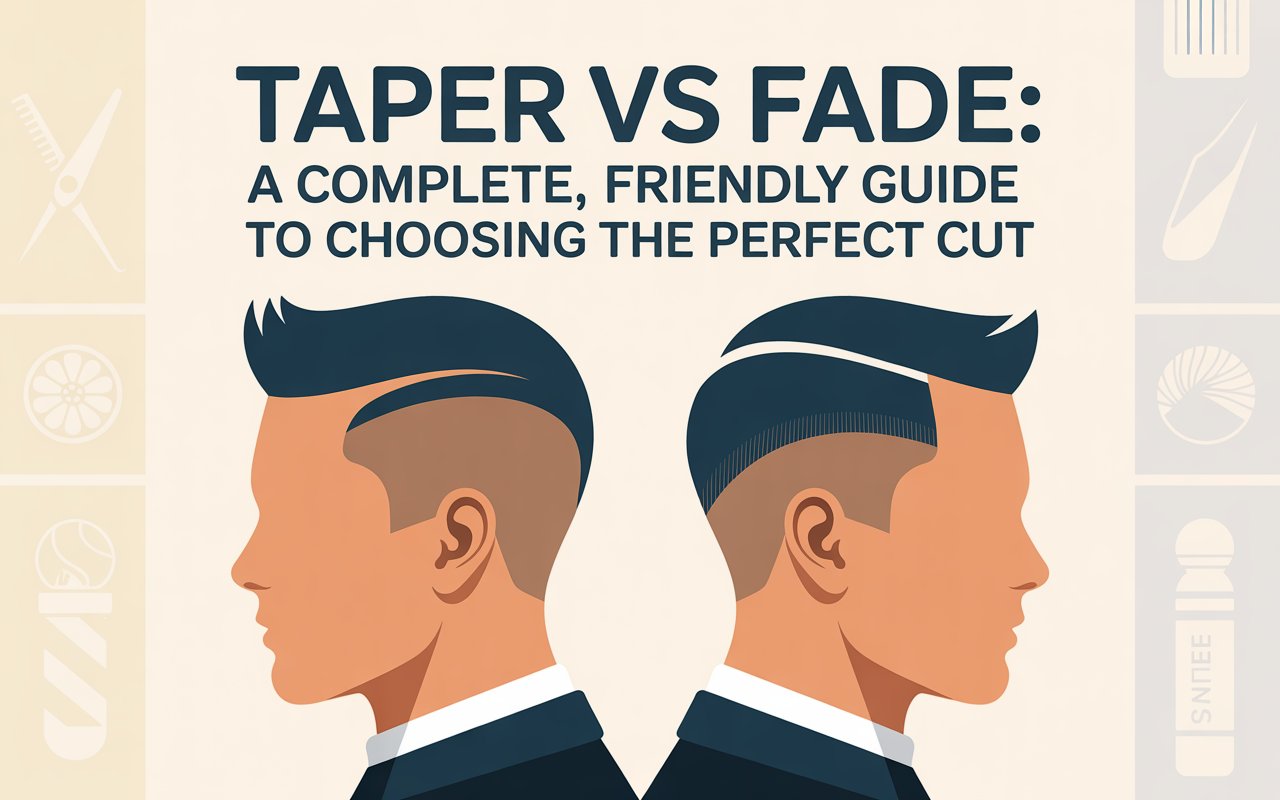
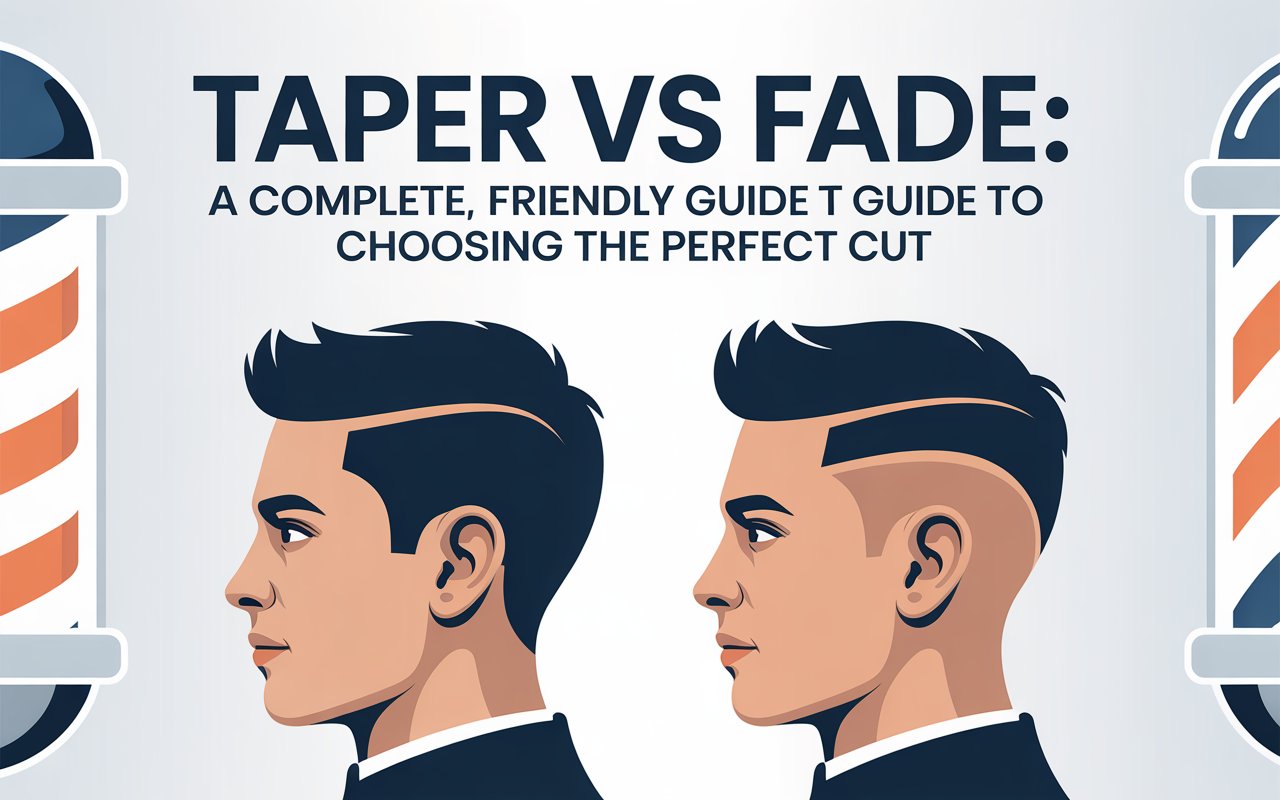
A taper is a haircut where the hair gradually gets shorter as it moves down toward the neckline. The transition is smooth and subtle—think of the soft fade of a sunset. The hair never gets super short at the bottom; instead, it maintains some coverage.
What Is a Fade?
A fade is similar in concept but more dramatic. The hair blends down to extremely short lengths, sometimes even skin level. The transition is sharper, bolder, and more noticeable.
Key Differences Between Taper vs Fade
Intensity of the Cut
A taper offers a gentler, more natural-looking progression, while a fade provides a sharper contrast.
Length at the Bottom
Tapers keep some hair around the sides and neckline.
Fades often end at skin, stubble, or nearly nothing.
Overall Look
Tapers feel clean but traditional.
Fades feel modern, edgy, and more defined.
Types of Tapers
Low Taper
This style starts very low around the ears. It’s calm, subtle, and great for beginners.
Mid Taper
A little bolder, the mid taper starts blending height around the temple area.
High Taper
Here, the transition begins higher on the head, giving a crisp, structured look without going full fade.
Types of Fades
Low Fade
A soft fade that starts low on the head. It blends nicely with longer hair on top.
Mid Fade
This option splits the difference. It’s noticeable but not extreme.
High Fade
The high fade clears the sides dramatically, creating a bold, clean, modern look.
Skin Fade
The shortest fade possible—hair blends all the way to bare skin. Sharp and eye-catching.
How to Choose the Right Style for Your Face Shape
Round Face
A high fade or high taper adds height and sharpens the face.
Square Face
A mid fade or low taper softens strong lines.
Oval Face
Lucky you—almost any style works.
Long Face
A low taper helps maintain balance by keeping some fullness on the sides.
Taper vs Fade for Different Hair Types
Straight Hair
Fades look especially sharp, as straight hair enhances the clean contrast.
Curly Hair
Tapers often work beautifully, maintaining natural volume.
Wavy Hair
Both styles work well because waves soften harsh lines.
Thick Hair
A fade can help control fullness.
Thin Hair
A taper preserves a fuller appearance.
Maintenance and Upkeep
Taper Maintenance
Tapers grow out gracefully. You can wait 3–5 weeks between haircuts.
Fade Maintenance
Fades grow out faster and need touch-ups every 1–3 weeks to stay crisp.
Styling Tips for Tapers
Use Lightweight Products
Creams and soft pomades keep the look natural.
Add Volume
Lift the top slightly for a polished but relaxed finish.
Styling Tips for Fades
Matte Products Look Great
Clays and powders add texture without shine.
Sharp Edges Enhance the Fade
Detailing the hairline amplifies the crisp effect.
Pros and Cons of Tapers
Pros
-
Natural look
-
Grows out well
-
Versatile for work or school
Cons
-
Not as bold
-
Less edgy compared to fades
Pros and Cons of Fades
Pros
-
Very modern
-
Clean and defined
-
Works with many haircuts
Cons
-
Requires frequent maintenance
-
Grow-out can look uneven
Which Style Suits Your Lifestyle?

If you prefer low maintenance, a taper is your friend.
If you like sharp, frequent refreshes, the fade wins.
It’s like owning two types of plants: one needs watering weekly, the other daily. Both can look great—you just choose the one you can keep alive.
Common Mistakes People Make at the Barber
-
Saying “just a fade” without specifying the height
-
Not bringing photo references
-
Forgetting to mention preferred hair length on top
How to Communicate Your Desired Cut Clearly
Use Simple Terms
Tell your barber:
-
The fade or taper height
-
How short you want the sides
-
How long you want the top
Bring Photos
Two images do more work than 20 words.
FAQs
1. Which cut is better for beginners—taper or fade?
A taper is generally better for beginners because it grows out gently and is easier to maintain.
2. Can I combine a taper and a fade?
Yes! Some hairstyles use a tapered neckline with a fade on the sides, blending both styles.
3. Does a fade work with long hair on top?
Absolutely. Fades complement long top styles like quiffs, slick-backs, and pompadours.
4. Which haircut lasts longer—a taper or a fade?
A taper lasts longer because it grows out more naturally.
5. Is a fade too bold for a professional workplace?
Most workplaces accept low or mid fades, but if unsure, a taper is always the safest choice.
Conclusion + Final Thoughts
Choosing between a taper and a fade doesn’t need to feel overwhelming. They both offer clean, stylish looks—you just need to decide whether you prefer something classic and gradual or bold and sharply defined.
Think of it like choosing between sneakers and dress shoes. Both serve a purpose. Both look great. It simply depends on when and where you plan to wear them.
Now you’re ready for your next barbershop visit with confidence, clarity, and maybe even a little swagger.

Other Articles
Pokemon Fire Red ROM – A Complete Guide for Modern Players