




If you’ve ever counted your fingers or lined up coins to keep track of something, you’ve already worked with the basic idea behind a number line. It’s simple, practical, and everywhere—from helping kids learn math to guiding adults through simple calculations.
In this article, we’re going to walk through the concept of the number line up to 20. But we’re not just talking math class here—we’ll explore how number lines work, why they’re useful, and how they sneak into everyday life more often than you might think.
Let’s dive in and take this one step at a time—just like a number line does.
What Is a Number Line, Really?
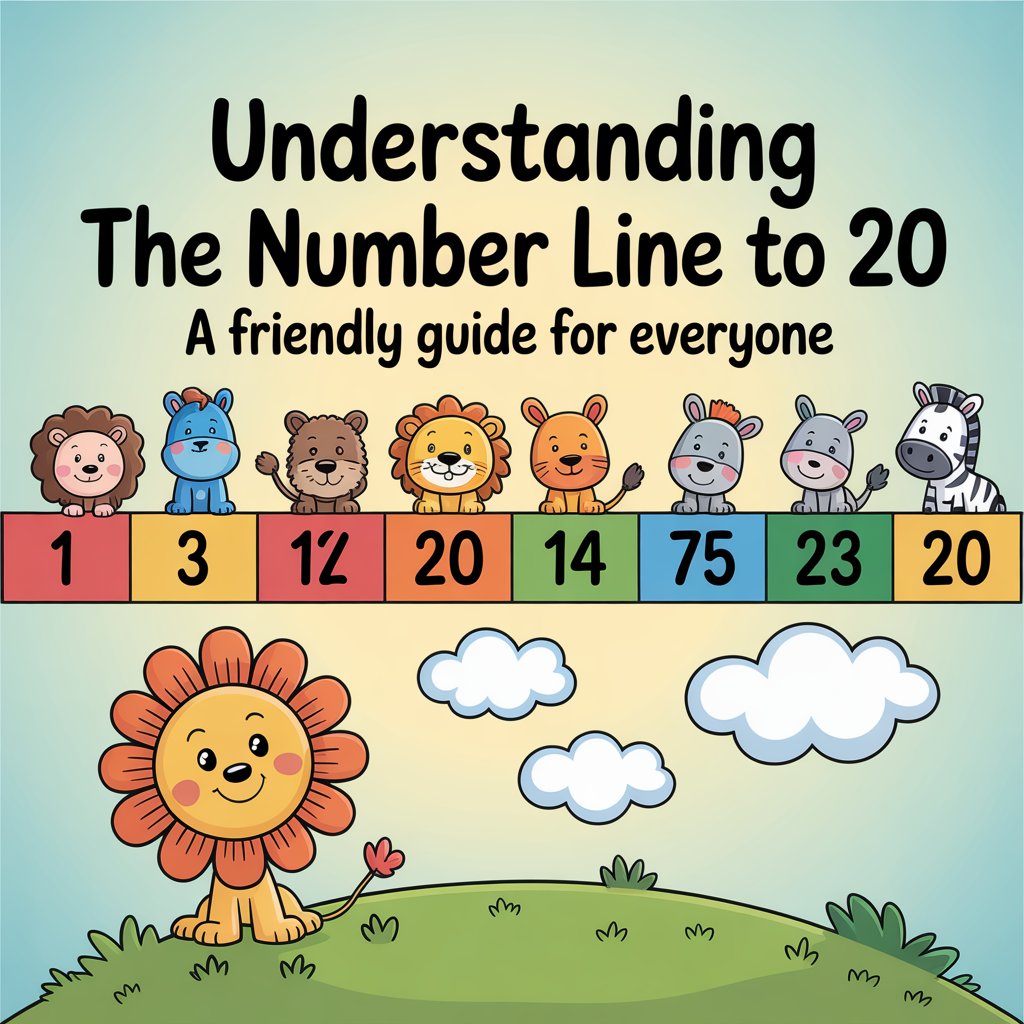
A number line is exactly what it sounds like: a line with numbers on it. It It typically begins at zero—though it can extend into negative values—and positions each number at evenly spaced intervals along a straight path.
When we talk about a number line up to 20, we’re looking at a simple horizontal line that goes from 0 to 20.
Think of it like a train track. Each stop on the track is a number, and the train (you) can move forward or backward. That’s the beauty of the number line—it gives a visual way to understand counting, adding, subtracting, and more.
Why Stop at 20?
Great question. The number 20 might seem random at first, but it actually represents an important learning milestone.
Children usually begin with a number line up to 10. Once they master that, moving up to 20 allows them to understand two-digit numbers, number patterns, and simple operations with a slightly larger range. For adults, it’s the perfect range for teaching, quick estimation, or mental math.
Plus, it covers numbers we often use in real life—think of shopping, cooking, or even keeping score in a game.
How the Number Line Builds Confidence in Math

Let’s face it—math can be intimidating. But number lines take away a lot of the fear. They’re like a visual map that shows you exactly where you are and where you need to go.
Whether you’re helping a child with their homework or brushing up on your own skills, a number line is like having a GPS for numbers. It makes math less abstract and more understandable.
Getting Familiar: Numbers 0 to 10
The first stretch of the number line, from 0 to 10, is the foundation. These are the numbers kids often learn first. They are arranged in order, one after another, along the number line.
0 → 1 → 2 → 3 → 4 → 5 → 6 → 7 → 8 → 9 → 10
Each number sits at an equal space from the next. When a child sees this, they begin to understand that 2 is one more than 1 and one less than 3. It’s a visual and intuitive way to understand order and quantity.
Extending the Line: Numbers 11 to 20
Once 0–10 is mastered, we move to the next segment: 11 to 20. This is where double digits come in. It can feel a bit trickier, but the same idea applies. Each number still sits the same distance apart, and you can count forward or backward just the same.
This stretch helps reinforce counting, place value, and early arithmetic like:
-
What comes after 14?
-
How many steps from 11 to 17?
With practice, this becomes second nature.
Adding and Subtracting Using the Number Line
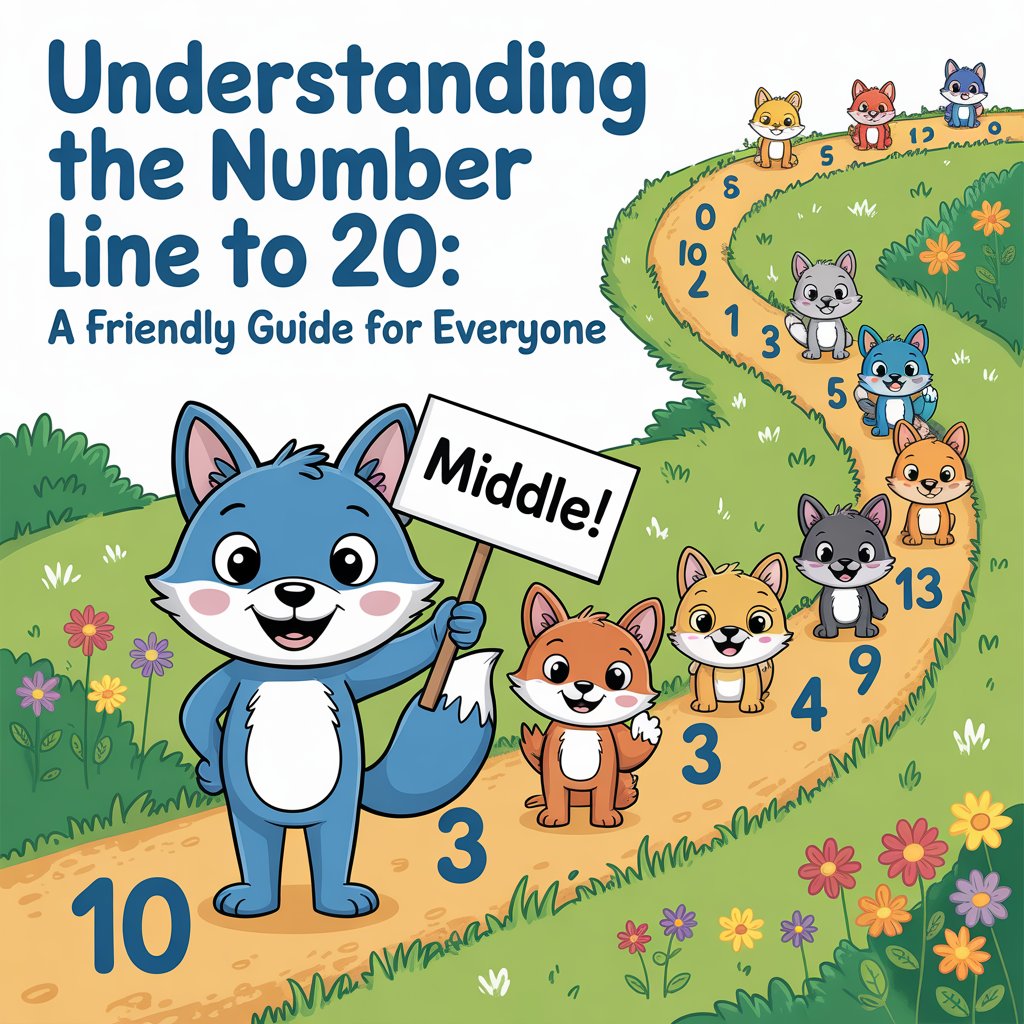
Here’s where the number line becomes really powerful. Need to add 4 + 3? Start at 4 and make 3 jumps to the right. You’ll land on 7. Subtraction works the same, just jump to the left.
This method helps people, especially children, see math as movement rather than memorization. It’s less about “knowing the answer” and more about finding it step by step.
Visual Patterns on the Number Line
There’s a certain visual harmony in the balanced layout of a number line.
Every number has its place, and this layout helps spot patterns:
-
Even and odd numbers: Take a look. 2, 4, 6, 8, 10… they fall on every other tick.
-
Skip counting: Want to count by 5s? Start at 0 and jump 5 spaces each time—5, 10, 15, 20.
-
Midpoints: Need to find what’s halfway between 10 and 20? You can literally see it on the line—it’s 15.
The number line isn’t just a teaching tool—it’s a way to see relationships between numbers.
Number Line Games and Activities
Let’s be honest—learning through play sticks better than dry memorization. Here are some simple and engaging activities to make the number line come alive:
-
Jumping games: Place numbers on the floor and have kids jump from one to another. Ask questions like “Jump three steps from 5. Where are you?”
-
Fill in the blank: Create a number line with missing numbers and let someone figure out what’s missing.
-
Treasure hunts: Hide objects with number clues like “Go to number 7, then take 2 steps forward.”
These activities turn math into movement and laughter—exactly how learning should feel.
Number Line in Everyday Life
You may not realize it, but you’re using number lines all the time without even thinking about it:
-
Thermometers: Going from 0 to 20 degrees? That’s a number line.
-
Rulers: Measuring something 18 centimeters long? The markings are part of a number line.
-
Time: Counting the minutes past the hour? You’re mentally moving along a number line.
So while the concept may seem “elementary,” it’s actually quite practical for people of all ages.
Helping Children Learn With Number Lines
If you’re a parent, grandparent, or caregiver, number lines can be a great resource. Here’s how to help:
-
Start small: Use physical lines at home with blocks or toys.
-
Ask questions: “What comes before 6?” or “How many steps from 2 to 8?”
-
Model thinking: Show how you solve problems using the line. Kids learn best by example.
These little steps go a long way in building number sense and confidence.
Digital Number Lines and Tools
In today’s digital age, you don’t have to draw everything by hand. There are plenty of online tools and apps that offer interactive number lines. These are especially great for visual learners and kids who love screen time.
Some even let you jump numbers, mark answers, and play games. If you’re teaching or learning at home, this can be a great supplement.
From Number Line to Number Sense
Think of the number line as the doorway to greater math skills. It’s not just about numbers from 0 to 20—it’s about understanding how numbers relate to each other.
Once that’s clear, other concepts like addition, subtraction, multiplication, and division feel a lot less scary.
It’s like learning to ride a bike. Once you’ve got your balance (or your number line), you’re ready to explore farther and faster.
Frequently Asked Questions (FAQs)
1. Why is the number line up to 20 important for early learners?
Because it introduces two-digit numbers and helps children develop counting, comparison, and basic arithmetic skills in a visual and manageable way.
2. Can adults benefit from using a number line?
Definitely—number lines are great for sharpening mental math, organizing budgets, mapping out plans, and even picturing time or distance more clearly.
3. What are some fun ways to teach the number line to kids?
Use jumping games, treasure hunts, or simple crafts. Turn learning into play to boost focus, enjoyment, and long-term understanding.
4. Is a number line only for addition and subtraction?
No. While it’s great for basic operations, number lines can also help with understanding patterns, estimating, and place value.
5. Are there apps or websites that offer number line tools?
Yes, many educational platforms provide interactive number lines. These can be useful for both classroom learning and home practice.
Conclusion: A Simple Tool with Big Benefits
The number line up to 20 might seem basic, but it lays down the groundwork for so many important math skills. From counting and comparing to problem-solving and mental math, it’s a simple tool with big potential.
Whether you’re guiding a child through their first steps in math or revisiting it yourself, the number line is a friendly companion. It teaches more than numbers—it teaches patterns, logic, and confidence.
So next time you think about math, remember the humble number line. It’s not just a line—it’s a ladder to learning.

Other Articles