





Introduction
Have you ever wondered what that fine grey dust is that seems harmless yet shows up in everything from roads to gardens to paint? That’s limestone powder—a simple-looking material doing heavy lifting behind the scenes. In this article, I’ll walk you through what limestone powder is, how it’s made, where it’s used, its benefits and drawbacks, and how it touches our daily lives. Think of it like the unsung stage-crew at a big play: you don’t see it up front, but nothing would quite look or hold together without it. Let’s dig in.
What is Limestone Powder?
When I say “limestone powder,” I’m referring to rock (specifically, limestone) that’s been crushed and ground into a fine, dust-like material. Limestone is a type of sedimentary rock largely made of calcium carbonate (CaCO₃).
When ground finely, the resulting powder inherits many useful traits: high calcium content, good chemical stability, and a neutral to slightly alkaline pH.
In a sense, you can think of limestone powder like flour in a kitchen: plain on its own, but when mixed with other ingredients it helps hold things together, gives texture, and supports structure.
How is Limestone Powder Made?
The production is fairly straightforward in concept, though industrially it can be complex. Here are the typical steps:
-
Quarried limestone rock is extracted from the earth.
-
The rock is crushed, then ground into finer particles until the desired size distribution is achieved.
-
The powder may be screened, washed, and dried (depending on the end use) to remove dust or impurities, and to ensure consistent quality.
Because the particle size, purity (how much calcium carbonate vs. other minerals), and surface properties matter a lot for performance, manufacturers often control these carefully.
Key Properties That Make It Useful
Why have we ended up using this material in so many industries? A few properties stand out:
-
High calcium carbonate content: Often more than 90% CaCO₃ for high-quality powder.
-
Fine particle size: Allows it to fill spaces in materials (like in concrete) or mix easily with other powders.
-
Neutral to slightly alkaline pH: So it can help neutralize acids (in soil, in water) rather than introduce new ones.
-
Abundant and natural: A rock that’s widely available, which helps with cost and scale.
-
Chemically stable: It doesn’t react aggressively in many situations (unless special conditions), which makes it a dependable material.
Because of these traits it’s like the “utility player” in a sports team — maybe not always in the spotlight, but useful in many different positions.
Roles in Construction & Infrastructure
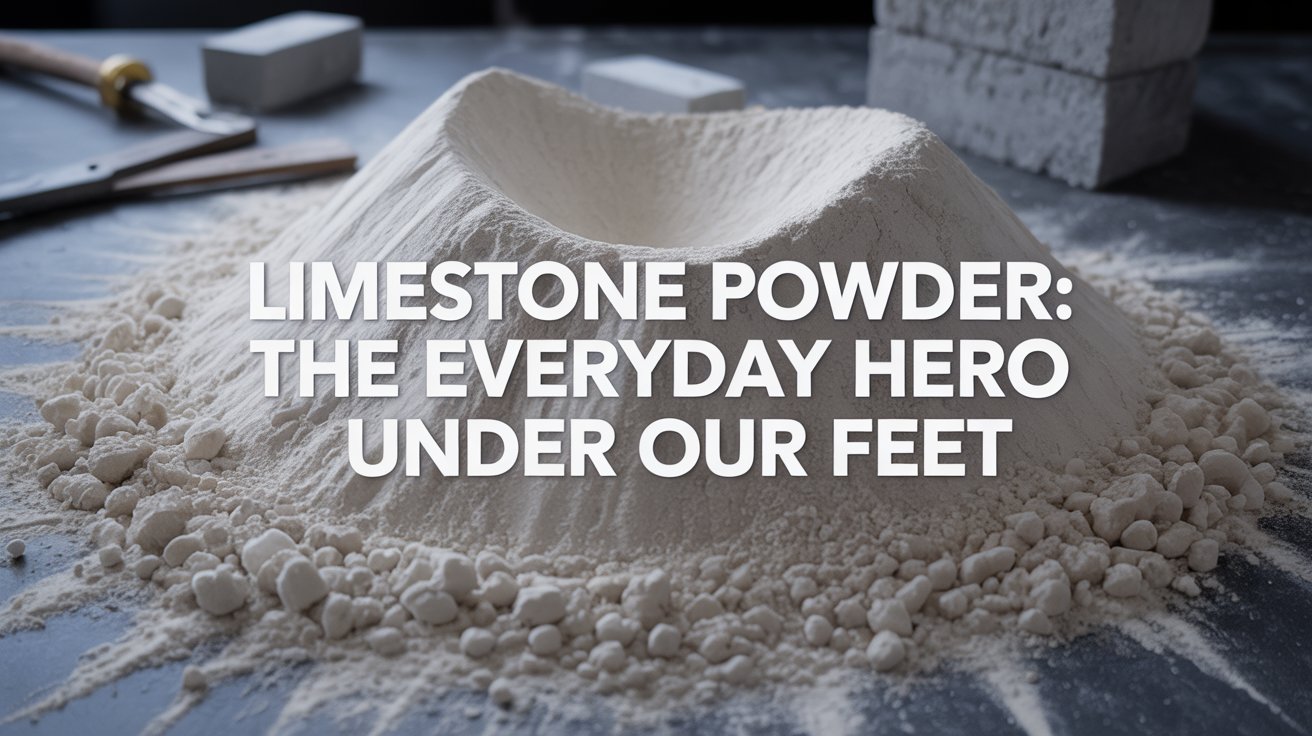
Perhaps the most visible use of limestone powder is in construction and infrastructure. Let’s break that down:
4.1 As filler in concrete and mortar
In concrete mixes, replacing a portion of cement or aggregate with finely ground limestone powder can improve workability, reduce shrinkage/cracking, and enhance durability.
In mortar, it fills in tiny voids, giving better cohesion when bonding bricks, stones, or blocks.
4.2 Soil stabilisation for foundations and roads
By mixing limestone powder with weak or acidic soils, engineers can improve the load-bearing capacity, reduce settling, and create more stable bases for roads and buildings.
4.3 Finishes, plasters, and decorative surfaces
Because of its fine texture and consistent color, limestone powder is used in stucco, plaster, coatings and decorative facades. It helps give a smooth finish and supports durability.
In this way, it’s not just hidden in the mix — it becomes part of what we see and touch.
Agriculture and Soil Use
You might know that gardens sometimes need lime to adjust the soil. Well, limestone powder plays a big role there too.
5.1 Liming acidic soils
If soil becomes too acidic (common with heavy rainfall, nutrient depletion, or certain crops), it can hinder plant growth. Limestone powder raises the pH to a more neutral level, making nutrients more available to plants.
5.2 Soil structure and root development
By improving pH and supplying calcium, the powder helps the soil structure loosen up, supports root expansion, and enhances microbial activity.
5.3 Animal feed & farm uses
It also enters the farm via animal feed as a calcium supplement for poultry and livestock (helping bone and shell strength).
And in barns/coops it can help absorb moisture and reduce odor because of its alkaline nature.
Industrial, Manufacturing & Environmental Applications
Beyond construction and agriculture, limestone powder finds itself in many industrial and environmental settings.
6.1 Filler in plastics, rubber, paper and paint
By adding finely ground limestone powder, manufacturers reduce cost (compared to expensive resins or pigments) while improving some performance properties (strength, brightness, smoothness).
6.2 Water and wastewater treatment
Because of its alkaline nature, it’s used to neutralize acidic water, precipitate metals, and treat sludge or mine-drainage water.
6.3 Environmental remediation
On the “big picture” side, limestone powder can act in flue-gas desulfurization (removing SO₂ from exhaust gases) and as a carbon-capture adjunct in some emerging systems.
It’s used as a raw material or flux in steelmaking, glass production, bleaching and chemical manufacturing.
Everyday Products You Might Not Expect
What’s fascinating is how often this powder shows up in everyday places — the kind of things you use without thinking.
-
Paper: gives smoothness, brightness, and acts as a cheap filler.
-
Paints & coatings: enhances opacity and durability.
-
Animal feed: calcium supplementation for healthy eggs, bones.
-
Even in some household cleaning formulations: calcium carbonate (from limestone family) acts as a mild abrasive or filler.
In short, limestone powder is like the backstage crew in a theatre production: you don’t notice them, but they’re vital to making everything work smoothly.
Benefits and Value: Why We Use It

Why does the world rely on this humble powder? A few reasons:
-
Cost-effective: Because limestone is abundant, using its powdered form as filler or conditioner helps reduce costs compared to some higher-end materials.
-
Versatility: From roads to gardens to plastics — so many uses.
-
Improves performance: In construction it improves strength & durability; in agriculture it improves soil health; in manufacturing it helps products perform better.
-
Environmental benefits: Neutralising acidity in soils or water, supporting greener production processes.
-
Resource efficiency: Using limestone powder can reduce waste, lower the amount of other more energy-intensive materials needed, and extend material life.
Risks, Limitations & Things to Watch
It’s not all perfect though — here are some caveats:
-
Dust hazards: Fine powder means potential inhalation risks. Limestone dust can be a mild respiratory irritant; long-term exposure to silica (if present) may have health risks.
-
Acid reaction: As a calcium carbonate material, limestone is vulnerable to acidic attack (acid rain, polluted environments). In architectural uses it can erode over time.
-
Quality variation: Not all limestone powders are created equal — purity, particle size, presence of impurities (silica, clay, iron) affect performance.
-
Over-application in soil: If the soil becomes too alkaline it can restrict nutrient uptake for some plants.
-
Environmental concerns: Quarrying the limestone and grinding to powder consume energy and may have ecological impacts.
Choosing & Using Limestone Powder: What to Know
If you might be buying or using limestone powder (for gardening, construction, or other purposes), here’s what to look out for:
-
Purity / CaCO₃ content: Higher calcium carbonate means stronger performance for most uses.
-
Particle size / fineness: Finer particles react faster and mix more uniformly; for fillers you may need very fine powder.
-
Target application: For example, soil amendment vs paint filler vs concrete additive each have different requirements.
-
Quality certification or source: Choosing reputable suppliers helps avoid hidden contaminants.
-
Safety handling: Use dust masks when handling large amounts; store in dry places to avoid clumping; ensure good ventilation.
-
Dosage & mixing instructions: In soil you’ll need correct rate to avoid over-liming; in concrete or paint the proper percentage is crucial for strength or finish.
-
Sustainable sourcing: If environmental impact matters to you, check for quarrying practices, transport footprint, and whether recycled or by-product material is used.
The Future: Trends and Sustainability
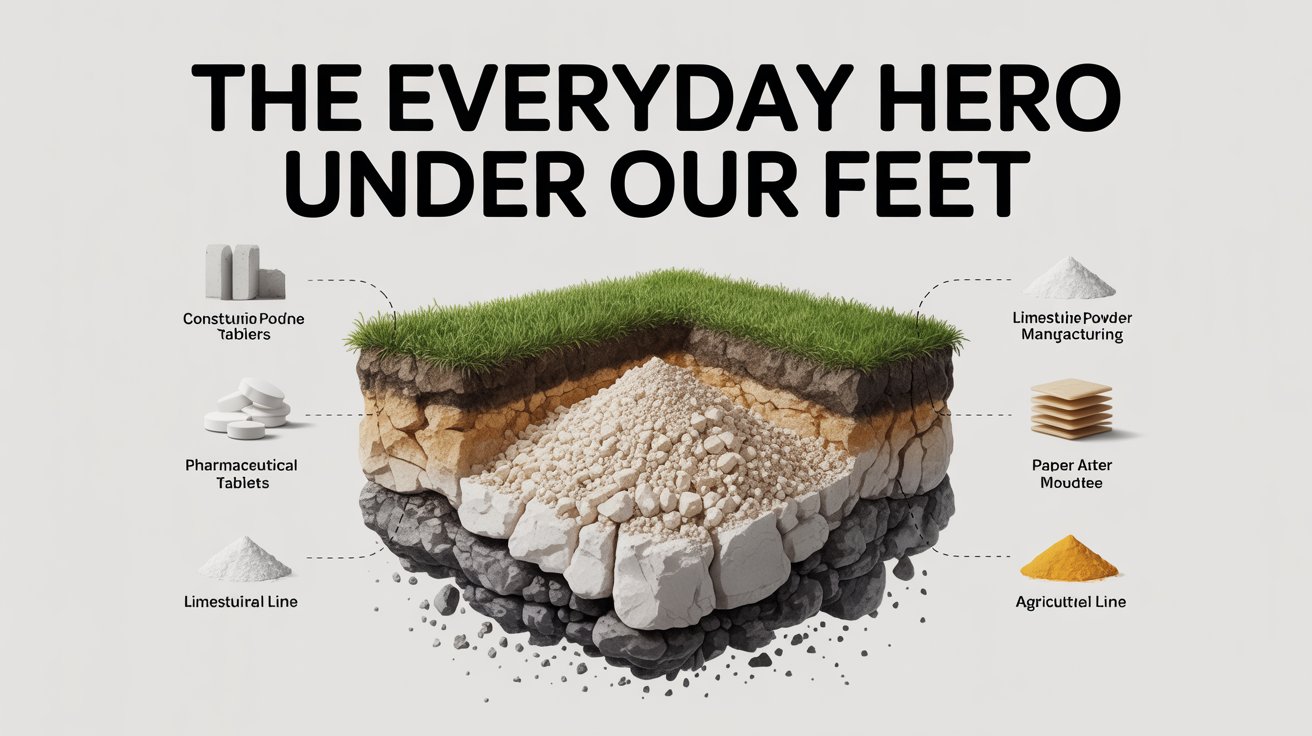
What’s next for limestone powder? A few interesting directions:
-
Carbon capture and storage: Research is looking at how calcium carbonate materials (like limestone powder) can play a role in capturing CO₂ or converting waste gases.
-
Advanced material fillers: As plastics, rubbers and composites push for lighter, stronger, cheaper materials, fine limestone powder may gain even more ground as a ‘functional filler’.
-
Circular economy & recycled materials: Using waste limestone powder from other industries or mining by-products could reduce extraction.
-
Green building materials: Using limestone powder for better-insulated, more durable, lower-carbon concrete or plasters.
-
Improved agricultural practices: Precision liming (using sensors to determine where soil needs it) means more efficient use of the powder, less waste, better yields.
In many ways, limestone powder is positioned to be even more important as we push for sustainable, efficient materials.
FAQs
Q1: What exactly does limestone powder do for soil in my garden?
It helps raise the pH of acidic soil (making it less sour), supplies calcium (an essential nutrient), and improves how the soil is structured so roots can grow better.
Q2: Can limestone powder improve concrete or building materials?
Yes — when added in the right proportions it can fill tiny gaps, reduce shrinkage and cracking, enhance durability, and help the material perform better long-term.
Q3: Is it safe to handle limestone powder at home?
Generally yes, but you should wear a dust mask or ensure good ventilation when working with large amounts. Avoid inhaling the dust and keep it away from kids’ play areas until cleaned up.
Q4: How much limestone powder should I apply in my garden or lawn?
That depends on your soil’s current pH, the type of plants, and the powder’s purity. Usually soil testing is worth doing so you can apply the correct rate rather than guess.
Q5: Is limestone powder environmentally friendly?
It can be. Because it’s a natural material that often replaces more expensive or energy-intensive alternatives, it has advantages. But quarrying and transporting it still have impacts — so choosing responsibly sourced powder and using it efficiently matter.
Conclusion
To bring it back full circle: that fine grey dust, known as limestone powder, might seem modest, but its impact is quite large. From the roads you drive on to the paper you print on, from the soil in your garden to the paint on your walls — it quietly supports many things. It’s versatile, cost-effective, and often sustainable, yet it comes with responsibilities too (like safe handling and mindful sourcing). If you think of our modern world as a big machine, limestone powder is one of the lubricant oils that keeps things running smoothly behind the scenes.
Next time you walk on a sidewalk, plant a garden, or open a fresh notebook, you might just glimpse the “hidden hero” at work.

Other Articles