




In life, we’re often told that talent, luck, or education are the key ingredients to success. But what if the real secret lies in something much simpler and more accessible to everyone—a can-do attitude? This mindset is like fuel for the soul, a quiet fire that keeps burning even when the winds of doubt and difficulty blow hard.
Whether you’re facing personal challenges, workplace stress, or simply trying to grow as a person, adopting a can-do mindset can be a real game changer. So, what does it really mean to have a can-do attitude, and how can it transform your everyday life?
Let’s dive in.
What Exactly Is a Can-Do Attitude?
A can-do attitude goes beyond mere positive thinking—it’s a bold approach to life fueled by self-belief, unwavering determination, and the resilience to rise every time you fall. It’s the belief that “I may not have the answer yet, but I can figure it out.” People with this mindset are proactive, solution-focused, and don’t shy away from challenges. They trust their ability to take initiative and keep moving forward, even when challenges stand in their way.
Why Is a Can-Do Attitude So Powerful?
A can-do attitude doesn’t just help you feel better—it actually changes how you respond to problems. It redirects your mindset from what’s holding you back to what could move you forward. It’s the mental difference between saying “I can’t do this” and asking “How can I do this?”
It’s like approaching a locked door not with despair but with curiosity, checking your keys, looking for an open window, or even building a new door altogether.
The Psychology Behind a Can-Do Mindset

Growth Mindset vs. Fixed Mindset
Psychologist Carol Dweck coined the term growth mindset, which aligns perfectly with the can-do spirit. A growth mindset sees talent and ability as things that can be nurtured through effort and learning, while a fixed mindset views them as unchangeable traits you’re simply born with.
A can-do attitude thrives in the growth mindset space—embracing mistakes, seeking feedback, and valuing the process.
Neuroplasticity and Self-Belief
Our brains are wired to adapt. This concept, known as neuroplasticity, proves we’re capable of learning and improving throughout life. When you repeat can-do beliefs, your brain starts to carve new mental pathways—making optimism and resilience easier over time.
Characteristics of People with a Can-Do Attitude
1. Optimism (Even When It’s Tough)
They look for silver linings and solutions rather than dwelling on problems. It’s not about being naive—it’s about believing something can be done.
2. Responsibility
They take ownership of their actions instead of blaming others. They ask, “What can I do about this?” Skip asking, “Why is this happening to me?” and start asking, “What can I make of this?” ask, “How can I grow from this?” consider, “What can I take from this experience?”, they ask, “What can I learn or do in response to this?”
3. Resilience
They bounce back from setbacks. Like a rubber band, they stretch under pressure but snap back into shape—often stronger.
4. Initiative
Can-do individuals don’t wait to be told what to do. They’re willing to move forward, even when the road ahead is cloaked in uncertainty.
Benefits of Embracing a Can-Do Attitude
At Work
You become the kind of colleague people trust with big tasks. You’re seen as reliable, driven, and adaptable. Promotions often follow those who say, “Let me try.”
In Relationships
A can-do approach leads to healthier communication, problem-solving, and support. Instead of giving up when conflicts arise, you look for ways to grow together.
For Mental Health
It reduces feelings of helplessness and increases self-efficacy—the belief that you can influence your own outcomes. It acts like an inner therapist encouraging you to keep going.
In Learning and Personal Growth
It keeps you from fearing failure. Every misstep becomes a lesson instead of a dead-end.
Common Barriers to a Can-Do Attitude (and How to Overcome Them)

Fear of Failure
Fear often quietly asks, “What if you don’t have what it takes to make it?” But the can-do mindset counters with, “What if I learn something amazing?”
Tip: Redefine failure as feedback. Swap “I failed” for “I found out what doesn’t work.”
Negative Self-Talk
Statements like “I can’t” or “This is too difficult” become mental barriers. If it’s too harsh to say to someone you care about, it doesn’t belong in your self-talk either.
Tip: Challenge your inner critic. Replace “I’ll mess this up” with “I’ll give it my best shot.”
Past Disappointments
Bad experiences can leave emotional bruises. But remember—you are not your past.
Tip: Write down what you learned from previous setbacks. You’ll realize how much you’ve grown.
How to Cultivate a Can-Do Attitude Daily
1. Start Small, Think Big
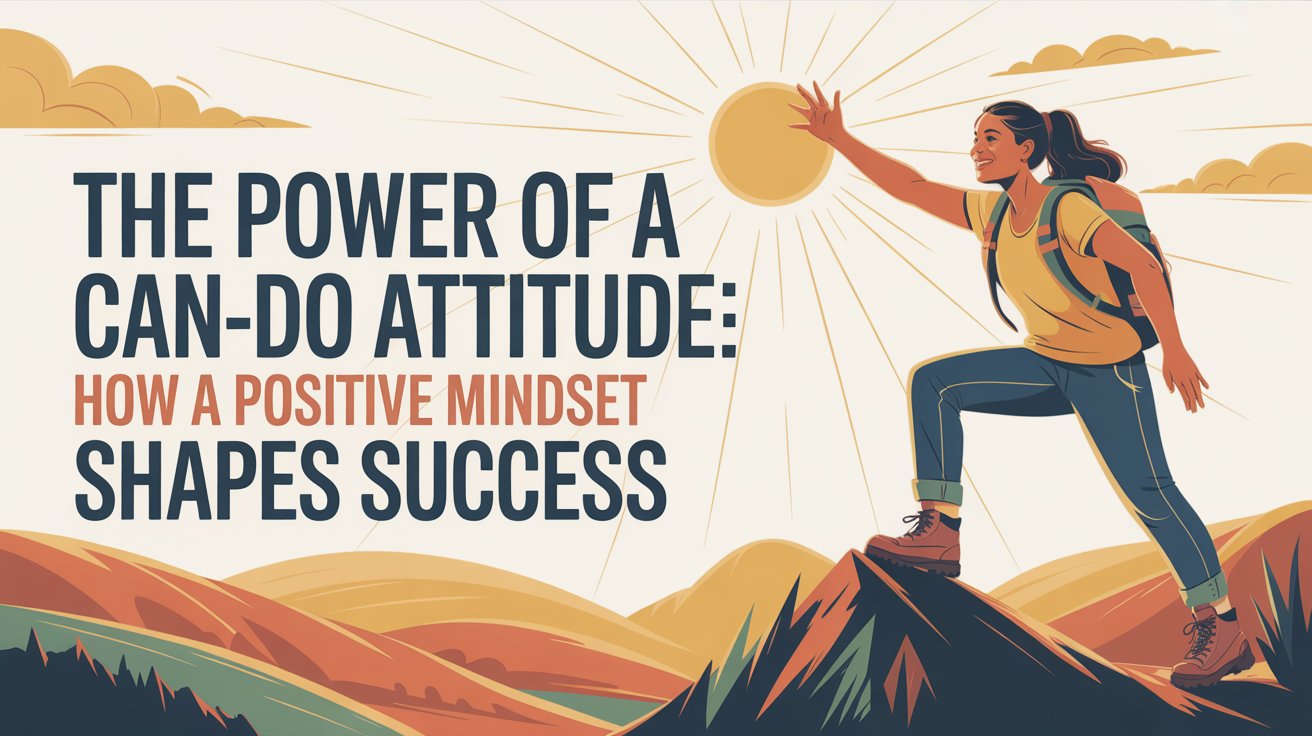
Even the tallest mountain is conquered by taking one small step after another. Want to get in shape? Start with a 10-minute walk. Want to launch a business? Research for 30 minutes. Action breeds confidence.
2. Celebrate Tiny Wins
Each small victory boosts your confidence and reinforces that you’re capable of achieving even greater things. Finished that email you were dreading? That’s a win. Don’t minimize progress.
3. Ask Better Questions
Instead of saying, “Why can’t I figure this out?” Ask yourself, “What’s one fresh approach I could take this time?”
4. Surround Yourself with Uplifting People
Positivity is contagious. Seek those who push you to grow, not those who drain your spirit.
Teaching the Can-Do Spirit to Kids
Instilling a can-do mindset early builds lifelong confidence. Instead of praising intelligence (“You’re so smart”), praise effort (“You worked really hard on that!”).
Show them that effort and struggle are proof they’re growing. Celebrate courage over perfection.
Using Setbacks as Fuel for Growth
Think of challenges like weights in a gym. Please improve and make it unique only line:. Setbacks are not signs to quit—they’re opportunities to build mental muscle.
Reflect on past difficulties. Didn’t they teach you more than easy victories ever did?
The Role of Gratitude in Strengthening Optimism
Gratitude helps you notice what’s going right. This rewires your brain to expect good things, making you more willing to try.
Keep a daily gratitude journal. Simply note three things you’re grateful for—no matter how little they may seem. It anchors your day in positivity.
How Leaders Inspire a Can-Do Culture
Great leaders don’t just set goals—they spark belief. Whether it’s a manager at work, a parent at home, or a coach on the field, leaders with a can-do approach uplift others.
They don’t punish mistakes—they use them as teaching tools. They reward effort, encourage questions, and create a space where people feel safe to try.
The Ripple Effect of One Can-Do Person
Have you ever been around someone who just radiates confidence and energy? It’s hard not to feel lifted. One person with a can-do attitude can transform an entire room, team, or family.
They lead by example, prove that challenges are manageable, and inspire others to believe in themselves.
FAQs
1. Is a can-do attitude something you’re born with?
Not at all. While some people may be naturally optimistic, a can-do attitude is a learned behavior. It’s built through steady effort, intentional mindset shifts, and daily practice.
2. How do I hold on to optimism when life gets heavy?
Focus on what you can control. Break tasks into smaller pieces, celebrate little wins, and stay connected with supportive people. Positivity isn’t denial—it’s the decision to move forward with hope, despite the obstacles.
3. Can a can-do mindset help in professional growth?
Absolutely. Employers value initiative, adaptability, and resilience. A can-do approach shows that you’re solution-oriented and ready to take on challenges, making you a valuable asset.
4. What’s the difference between confidence and a can-do attitude?
Confidence is belief in your ability. A can-do attitude is the willingness to try even if you’re unsure. Confidence isn’t a requirement to start—courage is.
5. How long does it take to develop a can-do attitude?
It varies from person to person, but small daily changes add up. Within a few weeks of practicing positive self-talk, goal-setting, and gratitude, you’ll start noticing a shift in how you approach challenges.
Final Thoughts: You Don’t Have to Be Perfect—Just Willing
Having a can-do attitude doesn’t mean you never feel doubt. It means you act in spite of doubt. It’s not the absence of fear—it’s the decision to move ahead while fear walks beside you.
Life will always throw curveballs. But when you believe you can swing the bat, you’ve already won half the battle.